A small dark spot on your child’s baby tooth may not look serious at first. Your child may still eat normally, play happily, and never complain about pain. This often makes parents think, “It is only a baby tooth. It will eventually fall out anyway.”
That is where a small dental problem can quietly become a much bigger one.
Untreated cavities in baby teeth can continue to grow even when a child does not feel any discomfort. Decay can reach deeper parts of the tooth, cause pain, affect eating, and sometimes lead to infection. Baby teeth also play an important role in chewing, speech development, and maintaining space for permanent teeth.
Understanding what happens when cavities in baby teeth are ignored can help parents recognize when their child needs dental care.
How Does a Cavity Develop in a Baby Tooth?
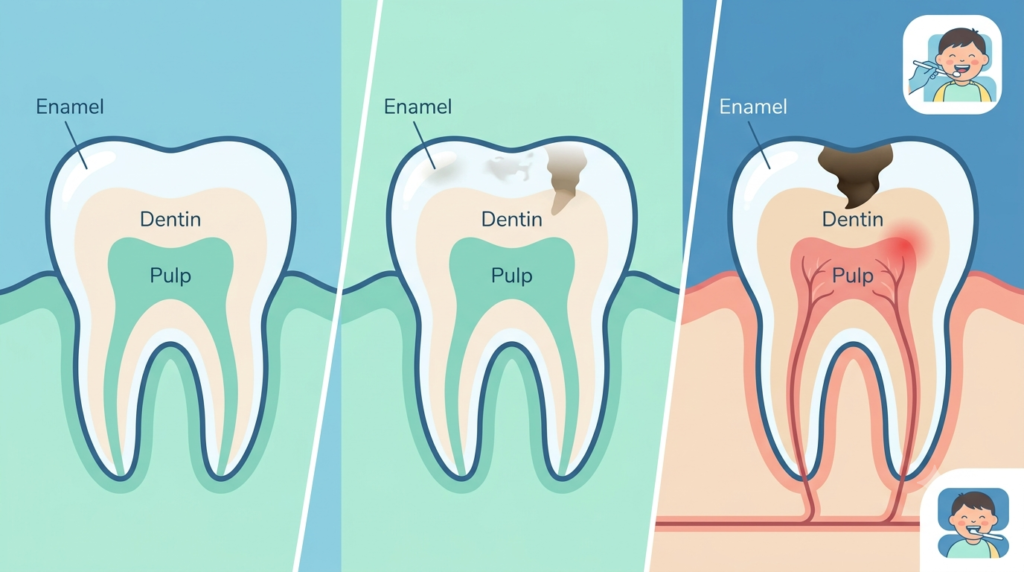
A cavity begins before a visible hole appears. Bacteria form a sticky layer called plaque. They use sugars and starches from food and drinks to produce acids. Repeated acid attacks remove minerals from the enamel.
The first sign may be a chalky white patch near the gum line. At this stage, a dentist may be able to slow or stop the damage through fluoride care, better brushing, and changes in eating habits. If acid attacks continue, the enamel breaks down and a hole forms.
Decay can then enter dentine, the softer layer below the enamel, before reaching the pulp that contains nerves and blood vessels. Once the pulp becomes inflamed or infected, a child may develop severe pain, swelling, or an abscess.
Frequent sugary snacks, sweet drinks, bedtime bottles containing milk or juice, and poor brushing can increase the risk. Early signs are easy to miss, so a dental examination is important.
Will the Problem Disappear When the Baby Tooth Falls Out?
Waiting is only safe when a dentist confirms that no treatment is required. Each baby tooth has its own natural shedding time. A decayed tooth may remain in the mouth for months or years before it is ready to fall out.
Baby teeth help children bite, chew, speak clearly, and hold space for permanent teeth. If decay causes early tooth loss, nearby teeth may move into the space. This can reduce the room available for the permanent tooth. A dentist may consider a space maintainer after an early extraction.
Pain may also disappear after the nerve inside the tooth dies. That does not mean the cavity has healed. Infection can remain and later cause swelling or an abscess. The National Institute of Dental and Craniofacial Research confirms that untreated decay can lead to pain, infection, and tooth loss.
What Happens When Cavities in Baby Teeth Are Left Untreated?
Pain and Sensitivity Can Increase
A growing cavity may cause sensitivity to cold, hot, or sweet foods. Pain can later occur during biting or without a clear trigger. Young children may struggle to explain it. They may become irritable, touch their face, avoid brushing, or chew on one side.
Eating, Sleep, and Learning Can Suffer
A painful tooth can make chewing uncomfortable, so a child may eat less or avoid certain foods. Night pain can interrupt sleep and leave the whole family exhausted. The American Academy of Pediatric Dentistry states that untreated dental disease can affect nutrition, learning, communication, and activities needed for healthy development.
Decay Can Cause an Abscess
Bacteria can infect the pulp and tissues around the root. Parents may notice gum swelling, a small pimple near the tooth, pus, bad breath, a bad taste, fever, or facial swelling.
A dental abscess will not heal by itself. Antibiotics may be needed if the infection is spreading or the child is unwell, but medicine alone does not repair the tooth or remove the cause. The dentist must still treat the tooth.
Treatment Can Become More Involved
An early weak area may need preventive care, while a small cavity may need a filling. A larger cavity may require a crown. If decay reaches the pulp, the dentist may recommend pulp treatment to preserve the tooth. A tooth that cannot be restored may need extraction.
Timely milk tooth cavity treatment may provide more options and reduce the risk of an emergency. The right treatment depends on the cavity depth, the tooth’s condition, the child’s age, and when the tooth should fall out.
When Does a Child’s Cavity Need Urgent Dental Treatment?
Arrange urgent dental care if the child has:
- Severe or constant pain, especially pain that interrupts sleep.
- Swelling of the gum, cheek, face, or jaw.
- Fever, pus, a bad taste, or a pimple on the gum.
- Difficulty eating, drinking, or opening the mouth.
- A broken tooth or rapidly worsening symptoms.
Seek emergency hospital care if swelling spreads towards the eye or neck, increases quickly, or makes breathing, swallowing, or speaking difficult. These symptoms may indicate a spreading infection.
Do not squeeze a swelling, place aspirin on the gum, or give leftover antibiotics. Ask a pediatrician, dentist, or pharmacist before giving pain medicine. The correct product and dose depend on the child’s age, weight, health, and other medicines.
Get Cavities in Baby Teeth Examined at Aesthetique Dental Clinic
A cavity in a baby tooth may start small, but waiting for it to disappear on its own can allow the problem to progress. Early dental care can help control decay before your child develops significant pain or infection. It also gives parents an opportunity to understand brushing habits, food choices, fluoride care, and other practical steps that can reduce the risk of future cavities.
If you are looking for a kids dentist in Marathahalli, visit Aesthetique Dental Clinic. Our dental team can examine the affected tooth, explain the suitable milk tooth cavity treatment, and guide you through the next steps based on your child’s dental needs.
Book your child’s dental appointment at Aesthetique Dental Clinic today and address the cavity before it progresses further.