
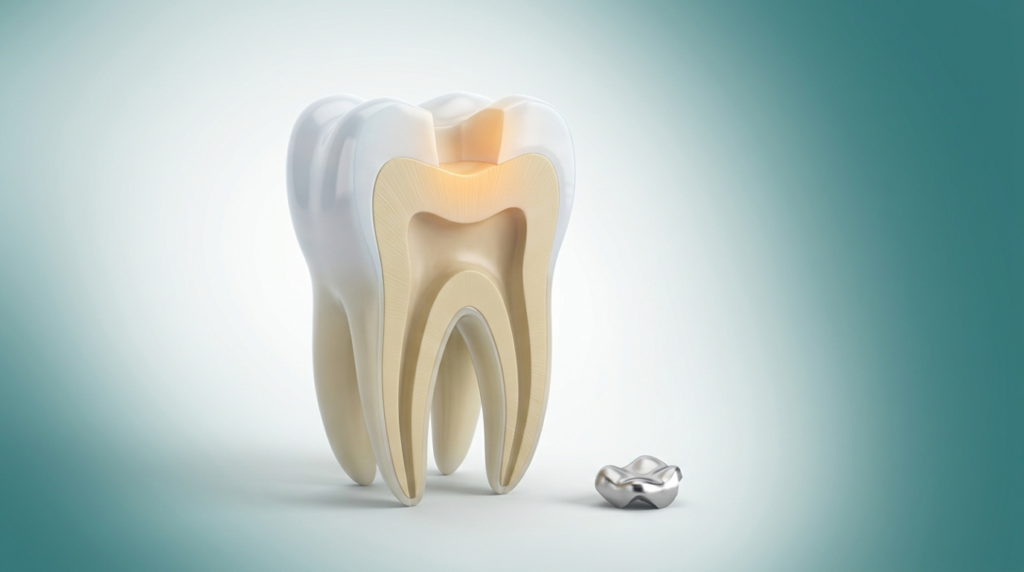
A dental filling can fall out while eating, brushing, or sometimes without any clear warning. One moment the tooth feels normal. The next, the tongue notices an empty space, a rough edge, or sudden sensitivity. This can feel worrying, especially when there is no pain, and it is hard to know whether dental care can wait.
When a dental filling falls out, the treated part of the tooth loses its protection. Food and bacteria can enter the opening, and chewing pressure may cause further damage. Knowing what to do after a filling falls out can help protect the tooth until a dentist examines it.
Why Do Dental Fillings Fall Out?
Dental fillings are strong, but they do not last forever. Daily chewing places repeated pressure on them. Over time, the filling material or the surrounding tooth may weaken.
A filling may become loose because of:
- New decay around or under the filling.
- Biting hard food, ice, or solid objects.
- Teeth grinding or jaw clenching.
- A crack in the filling or tooth.
- Normal wear after years of use.
- An uneven bite placing extra pressure on the tooth.
Sometimes a filling fails without warning. A dentist must examine the area to find the cause and decide whether another filling will provide enough protection.
How Can a Lost or Broken Filling Be Recognized?
The clearest sign is a loose piece of filling material in the mouth. The tooth may also feel different when the tongue passes over it.
Other signs include:
- A visible hole in the tooth.
- A rough, sharp, or broken edge.
- Food repeatedly becoming trapped.
- Sensitivity to cold, heat, sweets, or air.
- Pain while biting.
- Floss tearing or catching around the tooth.
Tooth pain after a filling fell out may feel like a sharp sensation or a persistent ache. It can result from exposed dentine, deeper decay, a crack, or nerve irritation. A dental examination can identify the actual cause.
What Should Be Done When a Dental Filling Falls Out?
When a filling falls out, what to do next depends on the symptoms and condition of the tooth. The following steps can provide temporary protection, but they cannot replace professional dental care.
Contact a Dentist Promptly
Call a dental clinic and explain when the filling came out, whether the tooth hurts, and whether you have any swelling. The dental team can assess the urgency and arrange a suitable appointment.
Do not wait for pain to begin before seeking care. A tooth without symptoms may still have exposed areas, decay, or weakened structure. Early assessment may allow the dentist to repair the tooth before the damage becomes more extensive.
Rinse the Mouth Gently
Rinse the mouth using lukewarm water to remove loose food particles. Avoid extremely hot or cold water because the exposed tooth may be sensitive.
Continue brushing the area gently using a soft toothbrush. Floss carefully to prevent food from remaining trapped beside the tooth. Stop if flossing causes pain or catches on a sharp edge.
Avoid Chewing on the Affected Side
Use the other side of the mouth until the tooth has been examined. Choose soft foods that require less chewing pressure.
Avoid hard foods such as nuts, ice and hard sweets. Sticky foods may enter the open area or place additional pressure on the remaining tooth. Very hot, cold or sugary foods may also trigger sensitivity.
Manage Discomfort Safely
A suitable non-prescription pain medicine may provide temporary relief. Always follow the instructions on the label. Never take more than the recommended amount or take another dose sooner than instructed.
A doctor, dentist or pharmacist should confirm which medicine is safe if there are allergies, existing health conditions, pregnancy or other medicines involved.
Pain relief only controls the symptom. It does not replace the lost filling, remove decay or repair a cracked tooth.
What Should Be Avoided After a Filling Falls Out?
A quick home repair may appear convenient, but the wrong substance or tool can damage the tooth and gums.
Do not push the old filling back into place. The filling may not fit securely and could be swallowed or inhaled.
Do not use pins, toothpicks or sharp objects to explore the cavity. These objects may injure the gums or damage the remaining tooth.
Do not place aspirin directly against the tooth or gum. Aspirin can irritate or burn the soft tissue.
Do not chew hard or sticky food on the affected side. Extra pressure may cause the tooth to crack.
Do not ignore the problem because the tooth is not painful. Pain may develop after further damage or inflammation occurs.
Do not use an unapproved home substance to seal the tooth. Only use temporary dental material if a dentist or pharmacist advises that it is appropriate.
When Is Emergency Treatment for a Lost Filling Needed?
Most lost fillings require prompt dental care rather than hospital treatment. However, emergency treatment for a lost filling may be necessary when the problem causes severe pain, increasing swelling, bleeding or significant tooth damage.
Seek urgent dental attention if there is:
- Severe or worsening tooth pain
- Swelling in the gum, cheek or jaw
- Fever alongside dental pain or swelling
- Pus or an unpleasant taste in the mouth
- A badly broken or cracked tooth
- Pain that prevents eating or sleeping
Facial swelling that causes difficulty breathing or swallowing requires immediate medical attention.
When Is Emergency Treatment for a Lost Filling Needed?
Most lost fillings require prompt dental care rather than hospital treatment. However, emergency treatment for a lost filling may be necessary when the problem causes severe pain, increasing swelling, bleeding or significant tooth damage.
Seek urgent dental attention if there is:
- Severe or worsening tooth pain
- Swelling in the gum, cheek or jaw
- Fever alongside dental pain or swelling
- Pus or an unpleasant taste in the mouth
- A badly broken or cracked tooth
- Pain that prevents eating or sleeping
Facial swelling that causes difficulty breathing or swallowing requires immediate medical attention.
Get a Lost Dental Filling Examined at Aesthetique Dental Clinic
A lost filling requires professional examination, even when the tooth does not hurt. At Aesthetique Dental Clinic, our dentist can assess the tooth, identify why the filling failed, and recommend suitable treatment based on the damage.
If your dental filling has fallen out, contact Aesthetique Dental Clinic and book an appointment before the tooth becomes more sensitive or damaged.